The quick answer
Is the Bomas of Kenya cultural show worth it?
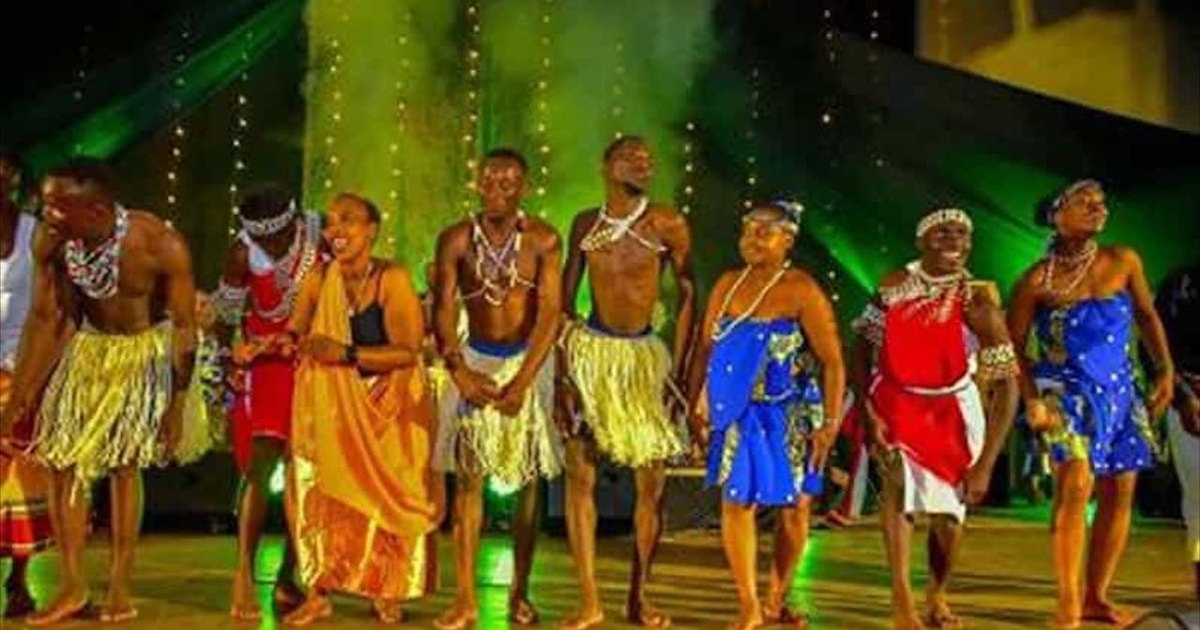
Yes. In one easy half-day you watch dancers and drummers in traditional dress, hear songs and folklore from across Kenya, see acrobatic performances, and walk among homesteads built in the styles of different communities. A driver brings you from your accommodation and back, so the afternoon is simple. It is a joyful, colourful show that needs no explaining, and you can cancel free of charge if your plans move. Guests give it 4 out of 5 from 12 ratings, a small but warm sample. The Bomas entry fee is paid on the day and is not part of the booking.
What lifts the afternoon
The stage
The Bomas of Kenya in Lang'ata is a cultural village that Wikipedia says opened in October 1971. The booking page puts you in front of its dance show, which draws on Kenya's many ethnic communities.
The homesteads
Wikipedia says the Bomas shows reconstructed homesteads of various Kenyan communities, built of mud, thatch and wood. The booking page lists traditional homesteads and huts as part of your visit.
The easy part
The listing includes a driver and transfers from your Nairobi accommodation, so there is no taxi to haggle for and no route to work out.
The extras
Craft shops sit on the site and there is a large wooden play area for children, which makes it a relaxed outing for families as well as couples and solo visitors.
The reassurance
Cancelling is free and you pay later, so you can hold a day in your Nairobi plans and settle it once the rest of the trip is fixed.
The takeaway
For a short, cheerful and well-organised look at Kenya's performing traditions, this half-day is hard to fault. Book a day, bring a little cash, and enjoy the drums.
Seven threads behind the show
Seven threads behind the show
Behind an afternoon at the Bomas sit a cultural village in Lang'ata, a unity call, a very varied country, a famous jumping dance, fast drumming and the homestead itself. Each thread below rests on an encyclopedia entry.
-
The place
A cultural village in Lang'ata
Wikipedia places the Bomas of Kenya in Lang'ata, about 10 km from Nairobi's central business district and near Nairobi National Park. Its Lang'ata entry describes a mostly residential suburb south-west of the centre that also holds the Giraffe Centre.
-
The purpose
Set up to show Kenya's cultures as they are
Wikipedia says the Bomas was founded in October 1971 through the Kenya Tourist Development Corporation, which the government had set up in 1965, to preserve and promote cultural tourism by presenting traditional cultures in authentic forms. It describes the site as a state corporation under the ministry for culture and heritage.
-
The troupe
The Harambee Dancers
Wikipedia says the resident Bomas Harambee Dancers were founded in 1973 and take their name from harambee. Wikipedia glosses harambee as "all pull together", a call Jomo Kenyatta adopted after independence in 1963; it is Kenya's motto and appears on the coat of arms.
-
The communities
A country of many peoples
Wikipedia's Demographics of Kenya entry says recorded ethnic categories grew from 42 in 1969 to more than 120 in 2019. The largest groups in the 2019 census were the Kikuyu (8,148,668), Luhya (about 6.8 million), Kalenjin (6,358,113), Luo (5,066,966) and Kamba (4,663,910). The listing says the show draws from Kenya's many communities.
-
The jump
The adumu, the Maasai jumping dance
Wikipedia describes the adumu as a Maasai dance in which young warriors stand in a circle and take turns jumping, keeping their bodies upright, and are judged on the height of the jump. It is danced in shukas and beads with song and chants at ceremonial occasions. The booking page does not say which dances you will see, so this is an example of the tradition rather than a promise.
-
The drums
Isukuti and the lyres of Western Kenya
Wikipedia says isukuti drumming ensembles of the Isukha and Idakho, both Luhya groups, are widely known in Kenya for their fast-paced rhythms and play at weddings, funerals and political rallies. The Wikipedia page on Kenyan music adds the nyatiti, an eight-stringed lyre associated with the Luo.
-
The homestead
Homes built from mud, thatch and wood
Wikipedia says the Bomas shows reconstructed homesteads of various communities. Its Maasai entry describes an enkang, a fenced enclosure around the huts, with shelters covered in cattle dung for waterproofing, and its Kikuyu entry mentions the thingira, a men's hut. The booking page lists traditional homesteads and huts in your visit.
Drawn from Wikipedia entries on the Bomas of Kenya, Adumu, the Luhya people, Demographics of Kenya, the Maasai and Kikuyu peoples, Harambee and Nairobi. The booking page does not list individual dances, so these are background, not a programme.
A timeline from a railway depot to a cultural village
Eight dates from a railway depot to a cultural village
- 1899
The railway reaches the site of Nairobi on 30 May, after the town began in 1898 as a railway depot
The source: Wikipedia, Nairobi
- 1946
Nairobi National Park is established, Kenya's first national park
The source: Wikipedia, Nairobi National Park
- 1963
Kenya becomes independent and Jomo Kenyatta adopts harambee, "all pull together", as a call to unite the country
The source: Wikipedia, Harambee
- 1965
The government sets up the Kenya Tourist Development Corporation
The source: Wikipedia, Bomas of Kenya
- 1971
The Bomas of Kenya is set up through that corporation in October
The source: Wikipedia, Bomas of Kenya
- 1973
The resident Bomas Harambee Dancers troupe is founded
The source: Wikipedia, Bomas of Kenya
- 2019
The census records more than 120 ethnic categories, up from 42 in 1969
The source: Wikipedia, Demographics of Kenya
- 2025
On-site shows paused for about two months from March for upgrades, then resumed
The source: Kenyans.co.ke, March 2025; guest reviews, 2026
What the listing covers
What the booking page covers
What follows paraphrases the booking page as we read it on 20 November 2026. Anything it leaves out, we leave out too; your confirmation email has the last word.
Open the calendar ↗The from-price was noted when this page was written and may move. The Bomas entry fee is separate and paid on the day.
- The show
- The page promises traditional dances, music, song and folklore, plus acrobatic performances, drawn from Kenya's many ethnic communities.
- The grounds
- You also see traditional homesteads and huts, craft shops, and a large wooden play area for children.
- The driver and transfers
- The half-day comes with a driver and transfers from your Nairobi accommodation.
- The length
- The page gives the half-day as about three and a half hours.
- The language
- The show and the booking are in English.
- The entry fee
- The Bomas entry fee is not included. You pay it at the Bomas on the day. This guide does not print the amount; check it when you are there.
- Meals, drinks and tips
- Budget separately for meals, drinks and tips.
- Cancelling and paying
- You can cancel without charge and settle the bill after reserving, according to the page.
A cultural show or a game drive
The Bomas show or Nairobi National Park?
Nairobi around the Bomas
More Nairobi bookings to pair with it
The Bomas show takes a half-day. Beside it sit a game drive in Nairobi National Park, a walk through the city centre and the elephant and giraffe stop. The Bomas entry fee is not included and is settled at the gate in the booking.
- See dates ↗
Bomas of Kenya cultural dance show
A half-day with a driver, transfers from your accommodation, the Bomas dance show, the traditional homesteads and the craft shops.
- See dates ↗
Nairobi National Park, elephants and Giraffe Centre
A shared day trip through Nairobi National Park with the option of the elephant orphanage and the Giraffe Centre; the page lists a pickup and a private option.
- See dates ↗
Nairobi National Park half-day game drive
A five-hour game drive in Nairobi National Park, rated by hundreds of guests.
- See dates ↗
Nairobi history, culture and modern city walking tour
A three-to-four-hour walk through Nairobi's history, culture and modern centre, with pickup available.
Also bookable in Nairobi
Planning your Bomas half-day
Before you go: four small decisions
Plan for the entry fee
The Bomas entry fee is paid on the day and is not part of the booking. Take cash or a card for that, and leave room in your budget for meals, drinks and tips, which the page also leaves out.
Wear comfortable shoes
You walk among the homesteads and the craft shops, so flat, comfortable shoes serve you best.
Bring cash for the craft shops
The craft shops are one of the pleasures of the visit, and small purchases are easiest in cash.
Check the date you pick
The booking calendar shows only the days currently on sale, so pick a day from it and keep your confirmation email handy.
Arrive relaxed
Let your driver take the strain of the route. Have water with you, wear a hat if the sun is out, and keep your confirmation email within reach so any question about the pickup is quickly answered.
More to read
Six reads on the Bomas, Kenya's dances and Nairobi
- Start here Is the Bomas of Kenya cultural show worth it? A half-day of dance, weighed up Dance, drums and homesteads on an easy half-day, set against what the page promises and how guests scored it. Open guide →
- Compared The Bomas of Kenya or Nairobi National Park: which Nairobi half-day? A culture-led half-day beside a wildlife trip, set side by side on length, rating and what you see. Open guide →
- Plan it What the Bomas of Kenya booking includes, and costs on the day The driver, the show and the grounds, and the costs the booking leaves for the day itself. Open guide →
- The place The Bomas of Kenya: its history, purpose and the Harambee Dancers How a cultural village in Lang'ata came about, and what its resident troupe is named for. Open guide →
- The dances Kenya's dances and drums: the adumu, isukuti and a country of many peoples Background on the traditions the Bomas show draws from, taken from encyclopedia entries. Open guide →
- The area Lang'ata and Nairobi around the Bomas: a short background Where the Bomas sits, how Nairobi began and what else lies nearby. Open guide →
FAQ
Questions before you reserve
Is the Bomas of Kenya cultural show worth it?
Yes. You watch traditional dances, music, song and folklore plus acrobatic performances, drawn from many of Kenya's communities, and walk among traditional homesteads and craft shops. A driver and transfers from your accommodation are included, and cancelling is free. Guests rate it 4 out of 5 from 12 ratings.
Is the Bomas entry fee included?
No. The Bomas entry fee is not included in the booking and is paid on the day. This guide does not print the amount, so check it at the Bomas. Meals, drinks and tips are not included either.
What is included in the booking?
The page lists a half-day with a driver and transfers from your Nairobi accommodation, the cultural dance show at the Bomas of Kenya, and time among the traditional homesteads and huts. The show and the booking are in English.
How long does it take?
The page gives the half-day as about three and a half hours.
Which dances will I see?
According to the listing, the show draws from Kenya's many ethnic communities and includes traditional dances, music, song, folklore and acrobatic performances. It does not name individual dances, so this guide does not promise any.
Do I get picked up?
Yes, the listing includes transfers from your Nairobi accommodation with a driver. Your confirmation email gives the arrangements.
What should I wear?
Comfortable walking shoes. You walk among the homesteads and the craft shops.
Should I bring cash?
Yes. Bring cash for the craft shops, and for the entry fee, which is paid on the day.
Is it suitable for children?
The page mentions a large wooden play area for children at the Bomas, so families find something for younger visitors. No age limit is stated on the page.
Who runs the Bomas of Kenya?
Wikipedia describes the Bomas as a state corporation, under the ministry for culture and heritage, set up in 1971. This guide is independent and is not the Bomas or its operator.
Can I cancel?
Yes. No-charge cancellation is on offer, and payment can wait until later.
Is the Bomas open for my date?
The show is running: guests reviewed it in June and September 2026, after the Bomas paused on-site shows for about two months from March 2025 for upgrades. The booking calendar shows the days on sale, and your confirmation email settles your day.
How does it compare with Nairobi National Park?
The Bomas is a culture-led half-day of about three and a half hours. The national park trip on the same city page runs five to eight hours and is about wildlife. Another guide here lays the two out together.
Is this the Bomas of Kenya website?
No, we are an independent guide. Reservations are made on the booking page, and we earn a commission if you reserve.
Is the show suitable if I have never visited Kenya before?
Yes. It is a friendly first look at the country's variety, with dance, music, song and folklore on one stage, and it assumes no prior knowledge. Reference entries in our guides give background if you want some.
What is the Bomas site like?
Wikipedia describes a cultural village in Lang'ata with reconstructed homesteads, an artefact gallery, a restaurant, craft shops and a very large auditorium. The booking page highlights the show, the homesteads and huts, the craft shops and a wooden play area for children.
Should I reserve early?
The calendar lists the days currently on sale, so choosing a day is straightforward. Weekend spots tend to go first, which is why we suggest booking early for those.
What if I would rather see wildlife?
The same city page lists a Nairobi National Park trip and a half-day game drive, and our comparison guide sets the culture half-day beside the wildlife option.